
The Wheel of Life
It's half past nine at night and the dishwasher's still full from last night. Nothing's gone wrong today. You're not upset. And there's still that hum underneath saying you're behind. Not on one thing. On all of it.
That feeling's real. It's also no use to you, because it doesn't tell you where to start.
So we give it somewhere to point.
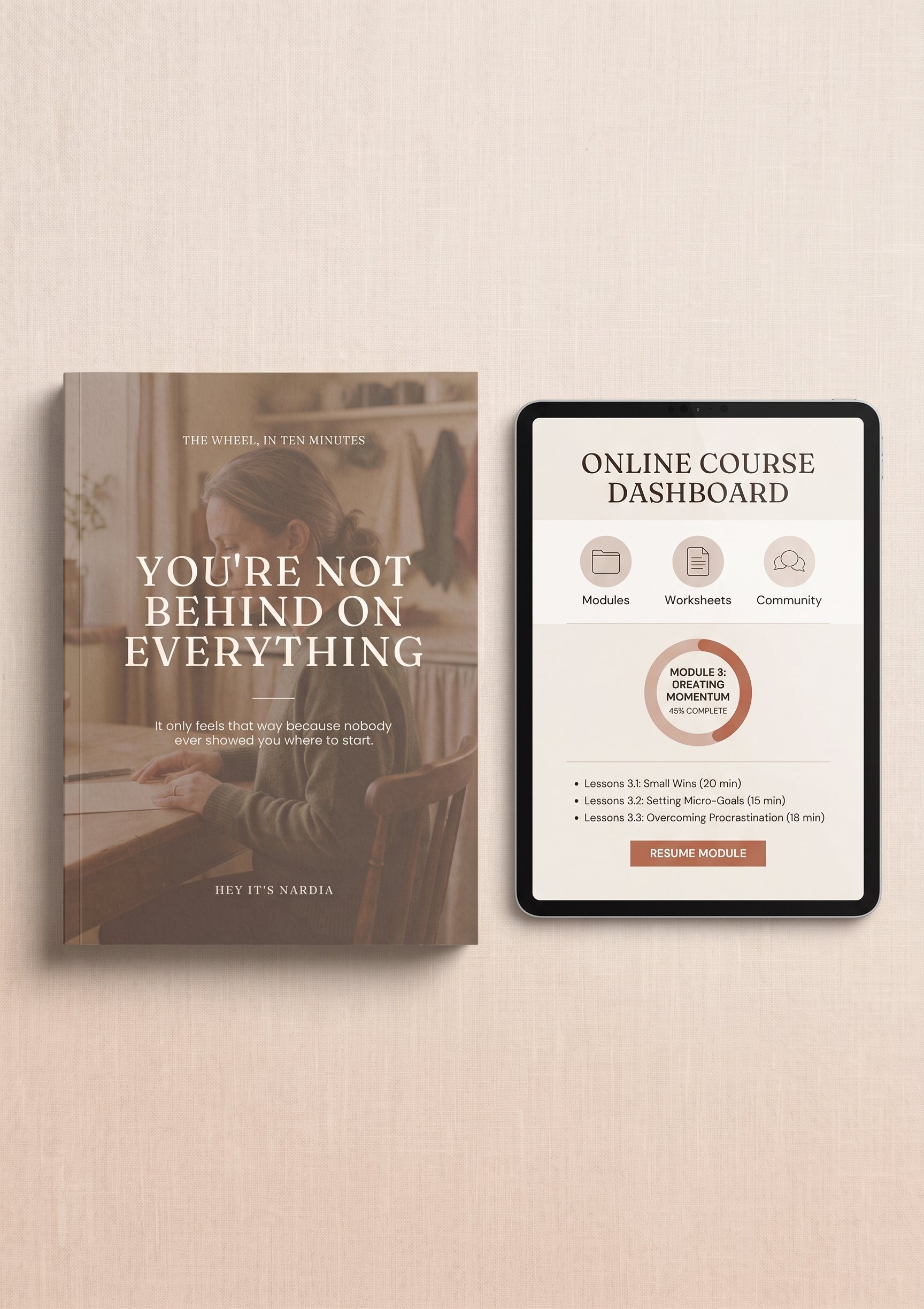
What's in it
You score ten areas of your life out of ten and join the dots. Bumpy is correct. If your wheel comes out a neat circle, you fibbed, and there's a lesson on that too.
Then you take the lowest three and ask one question of each: what does this need to move up one point? Not what it needs to become in five years. One point. The answer's nearly always time, energy, money or somebody else's help, and when the same word turns up twice, that's the thing underneath.
Which means you don't have three problems. You've got one, wearing three hats.
The rest of the course takes that one thing and gets you to a single action this week, written so it doesn't need a good week or a good mood to happen.
Who it's for
You're doing alright in some of this. That's the part people miss. Work might be fine, or the gym's sorted, and everything else has quietly gone flat while you were holding those up.
You've tried before. There's a half-finished course in a tab somewhere and you know exactly what page you stopped on.
And you've probably said at least one of these out loud: I don't know where to start. Other people have it much worse. I should have sorted this out by now.
If you've got a friend's number saved for the day it all falls over but no one's got yours, this is for you.

What it isn't
It's not therapy and it's not a substitute for it.
It's not a plan to fix all ten areas. Trying to do that is how most people end up here.
It's not thirty days of clean discipline. Four days out of seven is the target and the misses are already in the plan.
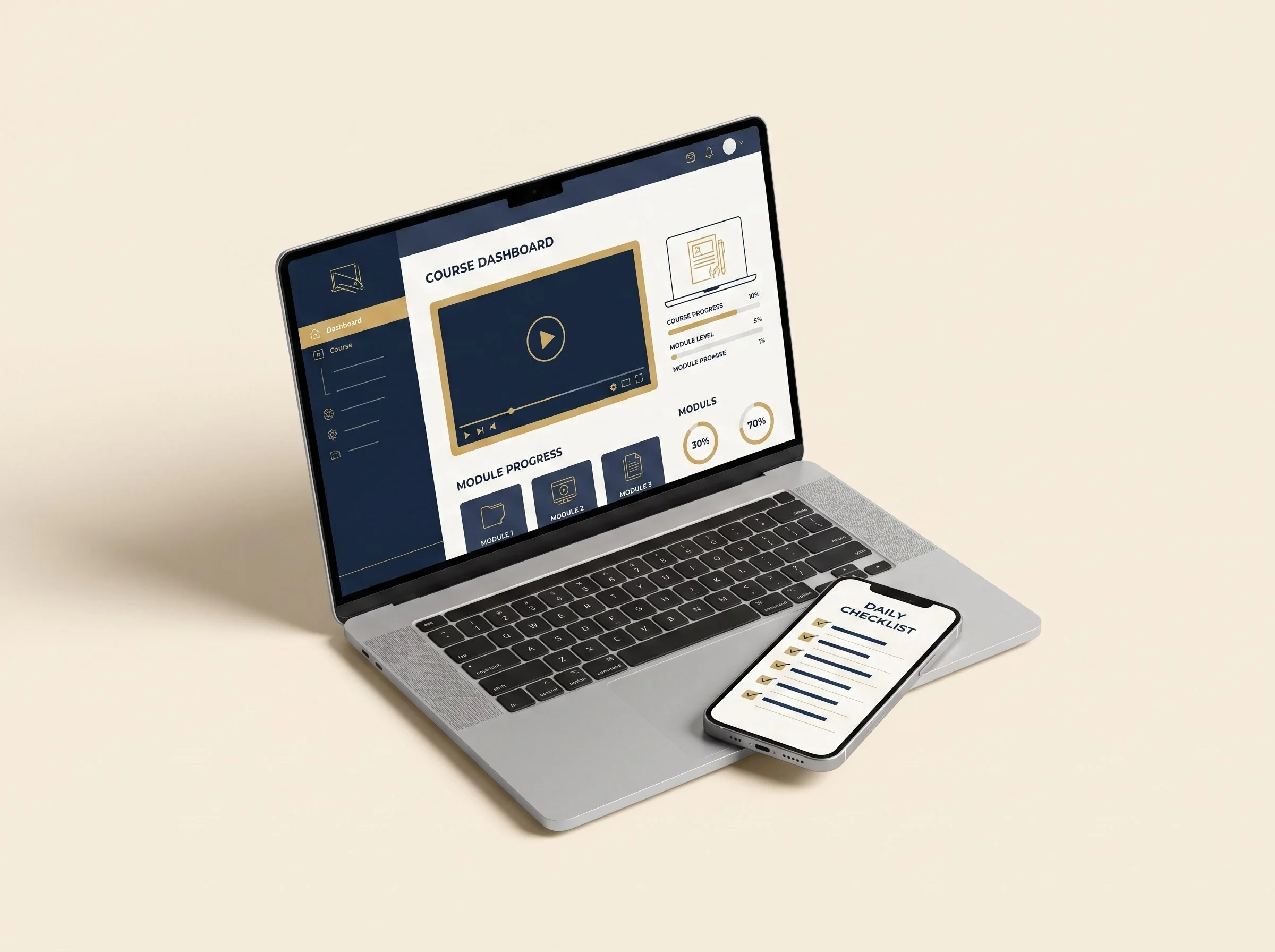
There's no live calls, no group, no Facebook community, no weekly check-in you'll feel bad about missing. It's eight lessons you can do at the kitchen table after the kids are down.
And it won't take an hour off your week. It's under an hour, all up.
What you get
Eight lessons, under an hour total. Short on purpose. Willpower's gone by eight at night, so nothing here needs any.
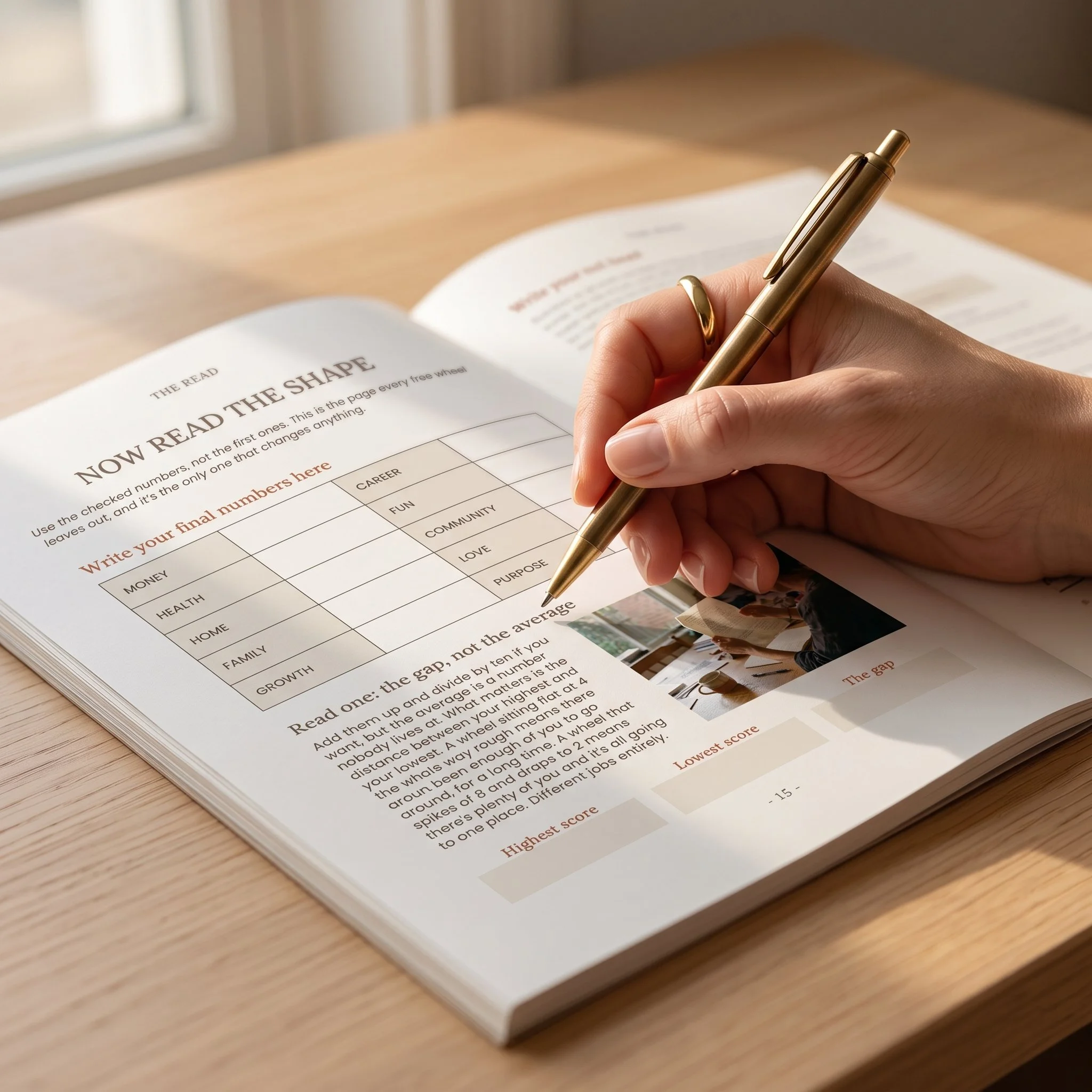
The workbook. Ten areas, four scoring rules, the wheel itself, and the read that most free versions leave out.
The Questions, all ninety. Nine per area. They don't ask how you feel about something. They ask what you actually do. The half second before the banking app finishes loading. Whether the radio's on or off in the car afterwards.
Ten tools, one per area. A thirty day declutter for Home. An expense audit with about seventy common costs already filled in, plus a planner that handles weekly and fortnightly and annual bills, because rego doesn't come monthly. Meal planning for Health. A stay-or-go sheet for Career. Word-for-word scripts for Family. Conversation cards for Love. A values sort for Purpose. More going in as I make them.
The thirty day tracker. Print it, stick it on the fridge, cross off a box.
The Week It Falls Over. A file you're told not to open until you stop. Because you will stop, and what you do after that is the actual skill.
Lifetime access, including anything I add later.
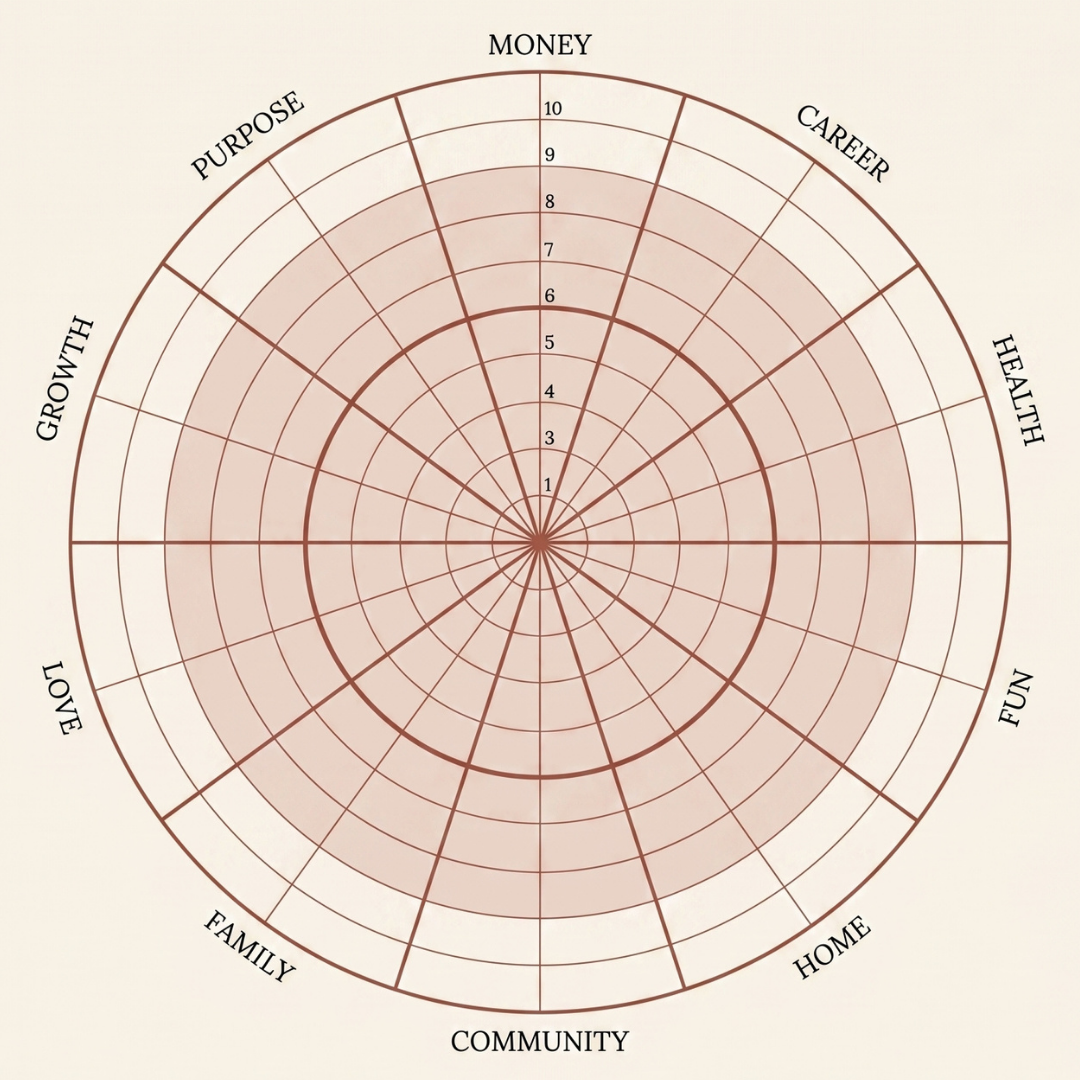
The ten areas
Money. Career. Health. Fun. Home. Community. Family. Love. Growth. Purpose.
Ten instead of the usual eight, because Fun and Community keep getting folded into other things and they're often where the score's lowest.
The bit that makes this different
Most versions of this stop at the score. You write a 3, you feel worse, you shut the book.
But a 3 out of what?
There's a picture in your head of what a 10 in that area looks like, and it's furnished. You know whose kitchen it is and what time of day it is. You've been marking yourself against it for years and nobody ever sat down and agreed it with you.
Lesson 3 is where you find out where you got it, how old you were, and what the people in that picture actually had. Two incomes. One adult with time. A partner doing half.
You've been comparing your resources to their result without once writing down what they were working with.
When people rescore against their own 10 instead of a borrowed one, it usually moves two or three points. Some of what you've been calling a problem was a measurement error, and you've felt it every day since you took the reading.
Price and access
$39 AUD. One payment, not a subscription.
Yours forever, including new tools as they go in.
Fourteen day refund, no questions and no form to fill in. Email me and it's done.
Everything's a PDF or a short video. Nothing expires, nothing needs an app.
Common questions
Do I need the free workbook first?
No, it's included. If you've already done it, start at Lesson 2.
How long does it take?
Under an hour of video across eight lessons. The scoring's about ten minutes, and the questions on your lowest three are about fifteen. You can do the whole diagnostic in one night.
Do I need to have done any of this before?
No. There's no jargon and nothing you need to have read.
What if it's not for me?
Fourteen days, full refund.
I never finish these things.
Nothing here needs a good week. Every action gets cut down until it sounds almost too easy, and there's a three minute version you write in advance for the bad nights. Lesson 7 assumes you'll stop and tells you how to pick it back up. Four out of seven days is a pass.
What if every score comes out low?
That's not ten failures. It usually means there hasn't been enough of you to go around for a long time, and there's a section on exactly that before you go any further.
Is this therapy?
No. It's a structured way to work out which part of your life to deal with first. If something heavier comes up while you're doing it, that's worth taking to a GP or a psychologist, and it's not a sign you did this wrong.
If things are heavy right now, please talk to your GP, or call Lifeline on 13 11 14. This course isn't the right tool for that and I'd rather say so.