
One to one coaching
You can name the pattern.
It's still running.
One on one coaching for the one thing you've understood for years and still do anyway. An hour a week, for six weeks.
Twenty minutes, video or phone. You won't be asked to decide on the call.
Why understanding it hasn't changed it
You've read the books. You might have done years of therapy. You know where it came from, you know who it came from, and you can watch it happen in real time.
You still apologise first in every disagreement, including at work. You still comfort the person who crossed the line. You still rehearse a memory before you say it out loud, so it sounds reasonable enough that nobody can wave it away.
That isn't you being slow at this. Understanding a rule and being free of it are two separate jobs, and nobody tells you the second one exists.
The first job you can do on your own, with videos and books and a notes app at midnight. The second one is harder on your own, because the part of you doing the checking is the part that got trained.
The bit that's actually hard
It's almost never willpower. It's the things nobody warns you about.
The other parent
The one who didn't do the damage but wears every consequence of you naming it.
The evidence
The photos, the heirlooms, the things that prove it happened, and who's holding them.
The clock
The elderly relative, the health scare, the sense that a clock is running and you'll be the one who got it wrong.
None of that gets solved by understanding your childhood better. Those are decisions, and decisions are easier to make out loud than at 2am in your own head.
The method
How family scapegoat coaching works
An hour with me, weekly, for six weeks, on one thing.
Not a general life review. We pick the pattern costing you the most right now and work on that one until it moves. Usually it starts in the family, because that's where the training happened, and then turns up at work and in your relationship wearing a different outfit.
Between sessions you've got something to do. Not journalling prompts. Something specific to try in the actual situation where the pattern shows up, and then we look at what happened. Including the weeks you didn't do it, because that's usually the most useful hour we have.
1 Notice it.
2 Work out what it's protecting.
3 Try something different.
4 See what your body does with that, and adjust.
Repeat until the old way stops being the automatic one.
What it costs
$99
a single session, AUD
$499
the block of six, AUD, paid up front
Prices are in Australian dollars, so if you're paying in US dollars it comes out lower than the number looks. For context, coaching in Australia usually runs between $100 and $250 a session, and most coaches won't tell you their number until you've sat through a call. I'd rather you knew now and decided in your own time.
If you finish the first session and it isn't what you wanted, tell me and I'll refund it. That applies to the block as well.
Book a free 20 minute callNothing is paid before the call.
Whether it's for you
This is for you if
You were the one in your family who noticed, said something, and got treated as the problem for saying it.
You've done the reading and hit the wall.
You can see the pattern at home, at work and in who you pick, and seeing it hasn't been enough.
You'd rather be asked a hard question than handled gently.
You'll do the work between sessions.
It's probably not for you if
You want confirmation it was all them.
You want to understand it without changing anything you do.
You want it sorted in a fortnight.
You want someone to tell you you're doing great. I'll tell you when you are. That isn't what you'd be paying for.
Things are in crisis right now. That needs a different kind of help first, and there are numbers at the bottom of this page.
The question nobody asks out loud
"What if I'm overreacting?"
Someone said on one of my videos that content like mine pushes people into cutting off family they'll regret losing. That's a fair thing to raise and I'm not going to pretend it isn't.
Here's what I actually think. I don't tell anyone to cut anyone off. The research on estrangement points the same way consistently: people don't do it lightly, and it usually follows years of raising something and being dismissed. But that's their decision and their timing, not mine.
What we work on is what you do in the room, whatever room you decide to be in. Plenty of people finish a block still in regular contact with everyone. They're just not managing the whole thing on their own any more.
Coaching, not therapy
I'm not a therapist and I don't treat mental illness. If what you're carrying needs clinical care, I'll say so, and I'll help you work out where to go.
That distinction matters more here than it does in most coaching. A lot of the good writing about patterns that won't shift is written by clinicians, and it points at nervous system work I'm not qualified to do. What I do sits somewhere else. Not what happened to you and why. What you actually do on a Tuesday, and what would have to change for Tuesday to go differently.
It isn't advice either. I'm not going to tell you whether to leave him or ring your mother back.
And it isn't a program with modules. It's built around what you bring.
Who I am
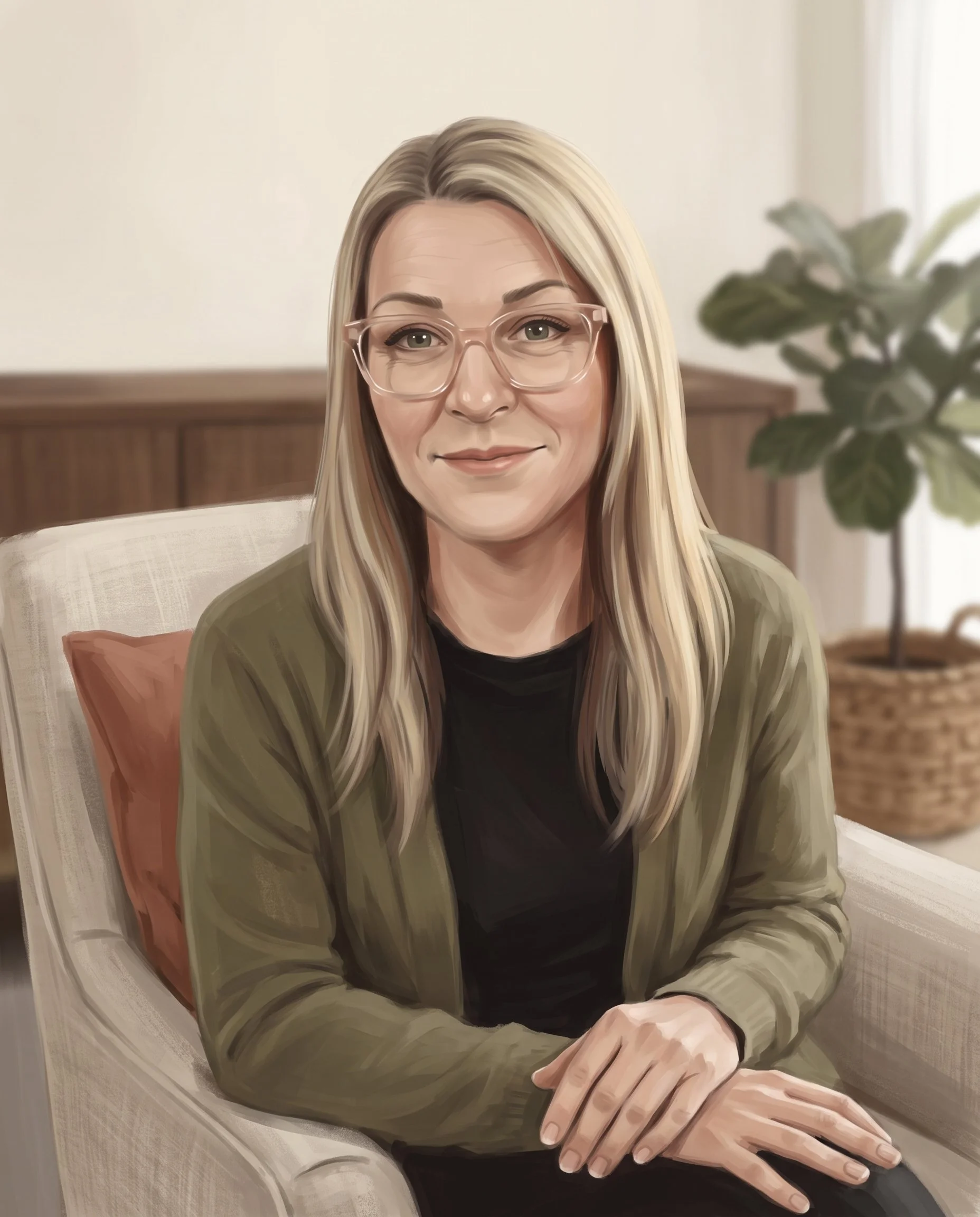
Hey, I'm Nardia.
I grew up in a house where reading the room wasn't a personality trait, it was how you got through the day. I was well into adulthood before I worked out that most of what I thought was me was training.
Then I spent a decade reading the mechanism underneath other people's finances, which turns out to be the same skill. Patterns. The thing driving the thing. How to explain it to someone without making them feel stupid.
I've rebuilt more than once, and I've walked away from things I was supposed to keep putting up with. I got certified in life coaching, applied neuroscience and positive psychology afterwards, mostly to find out whether what I'd worked out the hard way held up. Some of it did. Some of it didn't, and that was worth knowing too.
I'm in Western Sydney at the foot of the Blue Mountains, with three kids and a black Lab called Bentley who is a menace.
None of this is theoretical for me either.
What happens on the call
Twenty minutes, video or phone, free. You tell me what keeps happening. I ask a few questions.

1
This is a fit, and here's what it looks like.
2
This isn't a fit, and here's what I'd do instead.
3
You don't need coaching for this, and here's why.
You won't be asked to decide on the call. If you want to go ahead, I'll send the details afterwards and you can take as long as you like with them.
Common questions
Before you book
I'm not in Australia. Does that still work?+
Yes. Sessions are over video and I book across time zones. Prices are in Australian dollars, so it usually comes out lower than the number looks.
Do I need to do the free course first?+
No. It helps, because you turn up already knowing which area you picked, and we don't spend the first hour finding it.
How the six weeks run
Do I have to commit to six weeks?+
No. You can book one session at a time. The block is cheaper and it's what I'd pick, because six weeks is about how long it takes for a pattern to move rather than make sense.
What if I need to move a session?+
Tell me and we'll move it. Things come up. It only matters if moving it turns out to be the pattern.
Is it confidential?+
Yes. What you say stays with me. I'm not a registered clinician, so there are no clinical notes and nothing goes to anyone else.
Fit and limits
Can you help if I'm still in contact with my family?+
Yes, and most people are. What we work on is what you do in the room, whatever room you decide to be in.
What if something comes up that's bigger than coaching?+
I'll say so, and I'll help you work out where to go instead. That happens sometimes and it isn't a wasted session.
You didn't pick the training. You're the only one who can undo it.
You're allowed to want it to stop before you've got a complete explanation for why it started.
Book a free 20 minute callTwenty minutes, free. $99 a session, or $499 for six.

Not ready for a call? The free course does the first half of this on your own, and it's the same wheel I'd start with in a session.